


Quick Takeaways
- Gym type determines your experience: Traditional Thai gyms focus on authentic techniques and fighter development, fitness gyms emphasize conditioning and weight loss, tourist gyms cater to short-term visitors, and competition gyms train serious fighters
- Trainer credentials matter more than facilities: Look for instructors with verified fight records, proven teaching experience, and appropriate student-to-coach ratios (ideally 8-12 students per trainer for quality instruction)
- Safety protocols are non-negotiable: Proper equipment maintenance, structured warm-ups, controlled sparring guidelines, and injury prevention practices separate quality gyms from dangerous ones
- Class structure reveals teaching quality: Beginner-friendly gyms offer dedicated fundamentals classes, clear skill progression pathways, and separate advanced training rather than throwing everyone together
- Gym culture impacts long-term success: Respectful environments that encourage questions, welcome all skill levels, and foster supportive communities keep beginners motivated through challenging early months
- Pricing transparency indicates legitimacy: Beware of mandatory long-term contracts, hidden fees, equipment purchase requirements, or pressure tactics—legitimate gyms offer flexible options and trial periods
- Red flags are often subtle: Watch for unqualified instructors, lack of insurance, aggressive ego-driven sparring, discriminatory attitudes, poor hygiene, and resistance to questions or trial classes
- Trial classes reveal truth: Observe how coaches interact with beginners, whether experienced students are welcoming, class intensity levels, equipment quality, and whether your gut feels comfortable
Introduction: Why Your Muay Thai Gym Choice Shapes Everything
You've decided to start Muay Thai training. The excitement builds as you research gyms in your area, scroll through Instagram photos of fighters in action, and imagine yourself throwing perfect roundhouse kicks. But as you compare options, confusion sets in. One gym promises to make you a champion in six months. Another focuses purely on fitness. A third emphasizes traditional Thai methods. Prices range from $50 to $300 monthly. Which one is right for you?
Your Muay Thai gym choice will shape your entire journey more than any other single decision. Choose well, and you'll find skilled instruction, supportive community, appropriate progression, and genuine enjoyment that keeps you training for years. Choose poorly, and you'll waste money, risk injury, develop bad habits that must be unlearned, or quit in frustration within months.
The challenge is that most beginners don't know what to look for. Flashy facilities and aggressive marketing don't indicate quality instruction. A gym full of experienced fighters might be terrible for beginners. The cheapest option often delivers what you pay for. Without framework for evaluation, you're making blind decisions about something that will significantly impact your time, money, physical wellbeing, and potentially your long-term relationship with martial arts.
This comprehensive guide provides that framework. You'll learn to identify different gym types and match them to your goals, evaluate trainer quality beyond surface-level credentials, recognize essential safety standards, assess class structure and progression systems, read gym culture accurately, understand pricing models and spot hidden costs, identify red flags that signal problematic gyms, and leverage trial classes to make informed final decisions.
Whether you're looking for a Muay Thai gym for fitness, recreational skill development, or competitive ambitions, these evaluation criteria help you separate legitimate training environments from McDojos, unsafe operations, or simply wrong-fit options for your specific circumstances. The right gym for someone else might be completely wrong for you—and that's fine. The goal is finding your right match, not identifying some universal "best gym."
Let's start by understanding the different types of Muay Thai gyms you'll encounter and what each offers beginners.
Understanding Different Types of Muay Thai Gyms
Not all Muay Thai gyms are created equal, and they're not trying to be. Different gym types serve different purposes, attract different practitioners, and create distinct training experiences. Understanding these categories helps you identify which aligns with your goals before you waste time and money on wrong-fit options.
Traditional Thai Gyms - Authentic Culture and Fighter Development
Traditional Muay Thai gyms emphasize authentic Thai methods, cultural practices, and fighter development. These gyms are often run by Thai trainers or Westerners who spent significant time training in Thailand. They prioritize technical accuracy, respect for tradition, and often have competitive fighters training alongside recreational students.
What traditional gyms offer beginners:
- Authentic technique instruction based on Thai methods
- Strong emphasis on fundamentals before advancing
- Cultural elements like the wai khru ceremony and traditional music
- Exposure to competitive fighters and serious training culture
- Generally excellent technical instruction from experienced practitioners
Challenges for beginners at traditional gyms:
- Can be intimidating due to serious training atmosphere
- May have less structured beginner programs
- Cultural elements might feel unfamiliar or awkward initially
- Training intensity can be high even for beginners
- Less emphasis on fitness goals, more on skill development
Traditional gyms work well for beginners who respect martial arts culture, want authentic instruction, don't mind training alongside serious fighters, value technical depth over comfort, and plan to train long-term rather than casually experimenting.
Fitness-Focused Muay Thai Gyms - Conditioning and Weight Loss
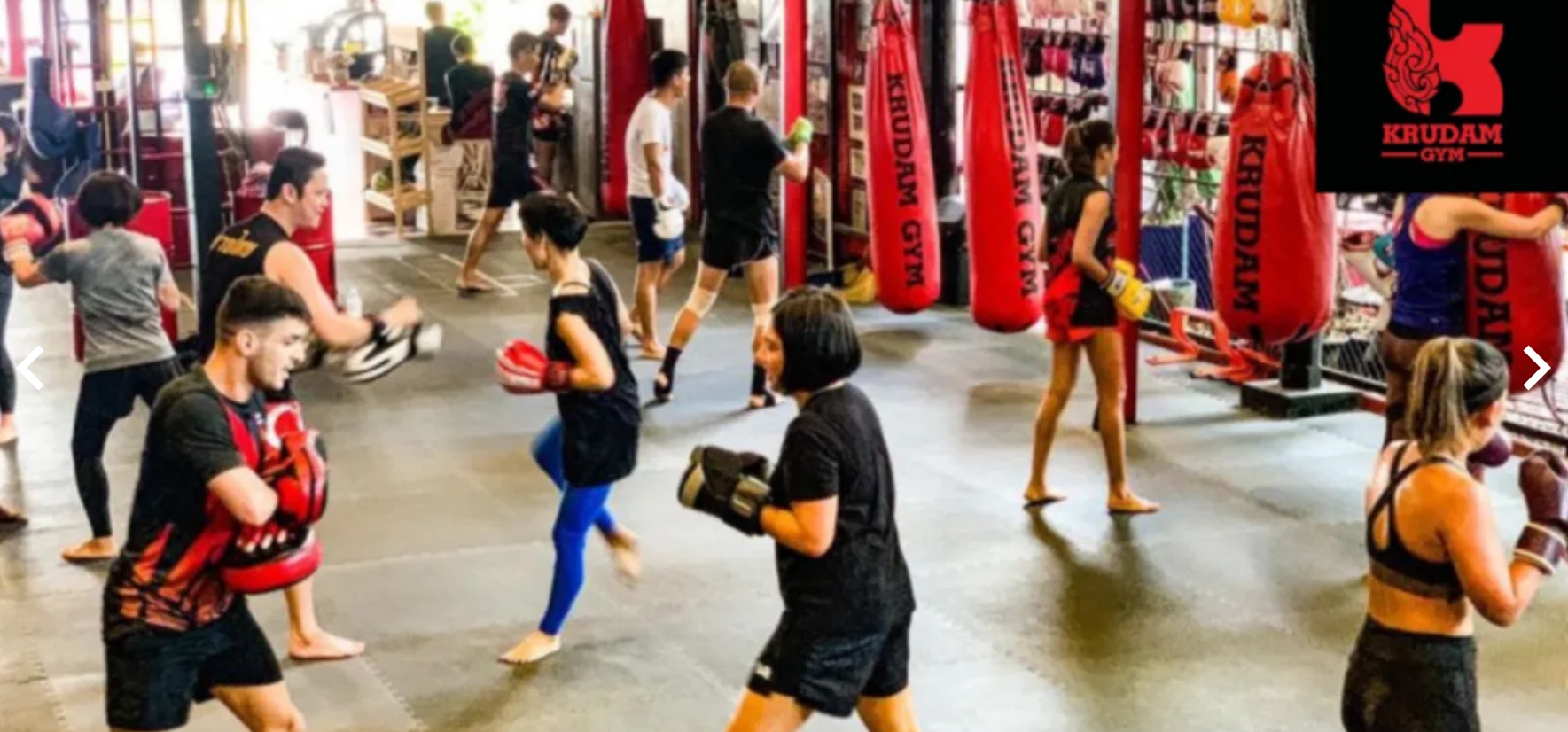
Fitness Muay Thai gyms emphasize cardiovascular conditioning, weight loss, and general fitness using Muay Thai-inspired workouts. These gyms recognize that most students train for fitness rather than fighting and structure classes accordingly. They often integrate modern fitness methodologies with Muay Thai techniques.
What fitness gyms offer beginners:
- High-energy group classes designed for conditioning
- Less intimidating atmosphere for fitness-oriented people
- Strong community and social elements
- Modern facilities with amenities like showers, lockers, and equipment
- Clear progression based on fitness improvements rather than fight skills
Limitations of fitness-focused gyms:
- Technique instruction may be less detailed or authentic
- Limited opportunities for serious skill development
- May not prepare you adequately if you develop competitive interest
- Can feel more like group fitness classes than martial arts training
- Experienced fighters may not train at these gyms
Fitness gyms work well for beginners whose primary goals are weight loss and cardiovascular fitness, who prefer high-energy group environments, who want minimal contact and no sparring pressure, who value modern facilities and amenities, and who have no current interest in fighting or competition.
Tourist Muay Thai Gyms - Short-Term Training and Cultural Experience
Tourist Muay Thai gyms cater primarily to short-term visitors, particularly in Thailand itself but also in major cities elsewhere. These gyms offer flexible drop-in options, basic instruction suitable for complete beginners, and cultural experience along with training. Training in Thailand offers an authentic experience steeped in tradition, surrounded by passionate trainers.
What tourist gyms offer beginners:
- Flexible scheduling without long-term commitments
- Welcoming atmosphere for complete novices
- Cultural immersion and unique experience
- Often include or coordinate accommodation packages
- Generally patient with varying skill and fitness levels
Considerations for tourist gyms:
- Instruction quality varies dramatically between tourist gyms
- High student turnover means limited community building
- May focus on experience over serious skill development
- Can be significantly more expensive than local options
- Not suitable for long-term consistent training
Tourist gyms work well for travelers wanting to experience Muay Thai, people testing whether they enjoy training before committing, those seeking cultural immersion with physical activity, and beginners who prefer extremely flexible scheduling. Training costs in Thailand typically range from 400-1,000 Baht per session or 10,000-30,000 Baht monthly for packages including accommodation.
Competition-Focused Fighter Gyms - Serious Training for Ambitious Athletes
Competition gyms train fighters—amateur and professional—as their primary focus. These gyms may allow recreational students but design training around fighter needs. The intensity, frequency, and technical demands exceed what most beginners require or can handle.
What competition gyms offer beginners:
- Highest level technical instruction available
- Exposure to serious training mentality and work ethic
- Potential to progress toward competition if that becomes your goal
- Training partners who push you to improve quickly
- Authentic fight preparation methods if competition interests you
Challenges for beginners at competition gyms:
- Training intensity may be overwhelming initially
- Less accommodation for recreational or fitness-only students
- Expectation of high training frequency (4-6 days weekly)
- Pressure toward sparring and eventually fighting
- Can feel unwelcoming if you're not serious about progression
Some gyms focus on training professional fighters and may not be suitable for beginners. Competition gyms work well for beginners who have clear competitive ambitions, previous athletic or martial arts experience, high fitness levels and recovery capacity, substantial time to dedicate to training, and comfort with intense, serious training environments.
Hybrid Gyms - Multiple Training Tracks for Different Goals
Many modern Muay Thai gyms recognize that students have diverse goals and create multiple training tracks within one facility. These hybrid gyms offer beginner-friendly fitness classes, recreational skill development programs, and competitive fighter training—allowing students to choose their path and potentially transition between them.
What hybrid gyms offer beginners:
- Options to match your current goals and potentially evolve
- Exposure to different training styles and intensities
- Community including both recreational and serious practitioners
- Flexibility to increase or decrease commitment level
- Generally strong business operations and professionalism
Considerations for hybrid gyms:
- Can be more expensive due to overhead costs
- May feel less intimate than specialized smaller gyms
- Sometimes sacrifice authenticity for accessibility
- Might have varying instructor quality across different programs
Hybrid gyms work well for beginners unsure of their long-term goals, who want flexibility to evolve their training approach, who appreciate professional gym operations, who value diverse training partners, and who prefer all-in-one facilities rather than potentially changing gyms later.
Evaluating Trainer Quality and Student-Coach Ratios
Facilities fade into irrelevance if instruction is poor. The single most important factor in choosing a Muay Thai gym is trainer quality—yet this is precisely where beginners struggle most to evaluate because they lack knowledge to distinguish skilled instructors from impressive-sounding charlatans.
Verifiable Fight Experience and Credentials
Instructors should have verifiable fight records or deep coaching backgrounds with proven track records teaching students at various levels. This doesn't mean every coach must have fought professionally—teaching ability and fight ability are distinct skills—but they should have legitimate Muay Thai experience verifiable through records, lineage, or reputation.
Red flags regarding credentials:
- Vague claims about training "in Thailand" without specifics
- Self-awarded titles like "Master" or "Grand Master"
- Non-Thai coaches calling themselves "Kru" or "Ajarn" without having trained extensively in Thailand
- Inability or unwillingness to discuss their training history
- No connection to recognized Muay Thai lineages or organizations
Green flags regarding credentials:
- Specific verifiable fight records (stadium, opponent names, dates)
- Clear lineage to respected Thai trainers or established gyms
- Multiple years of consistent teaching experience
- Student success stories (especially other beginners who progressed well)
- Appropriate humility about their skill level and continued learning
Don't be impressed by muscular physique, aggressive demeanor, or confident presentation. Lack of professional fight experience and only a couple years training are big red flags for trainer quality. Ask direct questions: Where did you train? Who trained you? How long have you been teaching? Can I speak with current or former students?
Teaching Ability Beyond Personal Skill
Some incredible fighters cannot teach effectively. They internalized techniques so deeply they struggle to break them down for beginners. Conversely, some moderately skilled fighters make excellent coaches because they remember struggling, analyzed technique deliberately, and developed communication skills.
Observe teaching ability during trial classes:
- Do explanations break techniques into manageable steps?
- Can the coach communicate clearly why techniques work certain ways?
- Do they demonstrate both correct and incorrect forms?
- Can they adjust explanations when students don't understand initially?
- Do they provide individual corrections beyond group instruction?
Experienced trainers guide students through technique nuances, ensuring learning of both physical and mental aspects. Excellent coaches make complex movements feel achievable through clear instruction, relevant analogies, patient repetition, and incremental progression. Poor coaches demonstrate once, expect immediate replication, and show frustration when students struggle.
Critical Student-to-Coach Ratios
Lower trainer-to-student ratios provide personalized attention and effective corrections, particularly beneficial for beginners. Class size directly impacts instruction quality. Even world-class coaches cannot provide adequate attention to 30 beginners simultaneously.
Ideal ratios for beginner training:
- 8-12 students per coach: Optimal for detailed instruction and individual correction
- 15-18 students per coach: Acceptable if structured with partner work and rotating attention
- 20+ students per coach: Problematic unless multiple coaches assist
- 30+ students per coach: Nearly impossible to provide quality beginner instruction
Watch trial classes carefully. Does the coach circulate and correct individual students? Do beginners receive specific technical feedback? Are students left confused or progressing with confidence? If you observe a class where most students work independently while the coach talks to one or two people the entire time, instruction quality will suffer.
Some gyms handle larger classes by having assistant coaches or senior students help beginners. This can work well if assistants are properly trained to teach. Other times, "assistance" means experienced students occasionally tell beginners what to do without systematic instruction—this is inadequate.
Assistant Coach and Senior Student Dynamics
Many gyms supplement head coaches with assistant instructors or designate experienced students to help beginners. This extends coaching capacity and can enhance learning when done properly. However, quality varies dramatically.
Effective assistant coach programs:
- Assistants receive specific training in teaching methodology
- They work under head coach supervision with clear roles
- They focus on technique correction, not just demonstrating
- They understand progressions appropriate for different skill levels
- They communicate respectfully and encouragingly with beginners
Problematic dynamics to avoid:
- Experienced students "helping" without formal training or oversight
- Assistant coaches undermining head coach instruction with conflicting advice
- Helpers who correct aggressively or make beginners feel incompetent
- Senior students using beginners as punching bags during partner work
- Assistants more interested in showing off than actual teaching
During trial classes, observe how assistant coaches interact with beginners. Do they offer helpful corrections or confusing alternative methods? Do beginners seem to appreciate their help or appear intimidated? Does the head coach coordinate assistant efforts or leave them unsupervised?
Safety Standards and Beginner-Friendly Practices
Soft tissue injuries comprise 80-90% of all Muay Thai injuries, with sprains and strains being most common among beginners and amateurs, many resulting from inadequate warm-ups. Safe training environments don't eliminate injury risk entirely—combat sports inherently involve controlled impact—but they minimize preventable injuries through proper protocols, equipment, progression, and culture.
Essential Safety Equipment and Maintenance
Quality gyms maintain equipment properly and provide adequate protective gear for different training activities. Well-maintained training mats, clean restrooms, and up-to-date equipment alongside safety amenities distinguish quality facilities.
Equipment standards to verify:
- Heavy bags: Properly hung, appropriately filled, no exposed seams or chains
- Thai pads: Sufficient padding without breaks or tears, handles intact
- Training mats: Clean, properly secured, adequate cushioning for falls
- Ring or training area: Safe boundaries, no hazards, appropriate surface
- Gloves available for rent/use: Clean, adequate padding, proper sizes
- Shin guards: Multiple sizes available, well-maintained padding
- Protective gear for sparring: Headgear, mouthguards, appropriate gloves (14-16oz)
Walk through the facility during your visit. If a gym looks like a frat house rather than a professional training environment, that's a major red flag. Notice broken equipment left unrepaired, worn-out pads still in use, dirty training surfaces, or inadequate protective gear availability.
Poor equipment maintenance signals either financial problems, lack of professionalism, or insufficient concern for student safety. All three should concern you as a potential student.
Structured Warm-Ups and Injury Prevention
Many injury participants admitted to inadequate warm-up before injuries occurred. Every class should include systematic warm-ups preparing your body for training intensity. This isn't negotiable—it's fundamental injury prevention.
Comprehensive warm-ups include:
- General cardiovascular activity: Jump rope, light jogging, shadowboxing (5-10 minutes)
- Dynamic stretching: Leg swings, arm circles, torso rotations, hip openers
- Muay Thai-specific movements: Technique drills at reduced intensity
- Progressive intensity: Gradual increase from light to working pace
Poor safety protocols create frequent injuries, particularly in gyms with intense sparring and minimal protective gear requirements. Be skeptical of gyms where classes start immediately with high-intensity bag work or sparring without adequate preparation. Your body needs transition time from rest to explosive activity.
Similarly, proper cool-downs help recovery and reduce next-day soreness. Good gyms dedicate 5-10 minutes post-training to static stretching, breathing work, and gradual heart rate reduction.
Controlled Sparring Guidelines and Progressive Contact
Sparring is where most beginners get injured, usually because gyms lack clear guidelines about intensity, protective equipment requirements, and readiness assessment. Gyms with sparring that looks like all-out fighting every session indicate a "winning at all costs" mentality leading to injuries, burnout, and toxic atmosphere.
Beginner-safe sparring protocols:
- Minimum training time before sparring: Usually 3-6 months of fundamentals
- Mandatory protective equipment: Larger gloves (14-16oz), headgear, mouthguard, shin guards
- Controlled intensity agreements: Light technical sparring, not knockout attempts
- Size and skill matching: Beginners with beginners, appropriate weight differences
- Coach supervision: Active monitoring with immediate intervention if needed
- Communication of boundaries: Permission to decline, establish intensity levels, stop when needed
Tap gloves at start and end of each sparring round to set tone—you're there to learn, not to win. Warning signs include beginners sparring without protective gear, experienced fighters going hard against complete novices, coaches allowing aggressive uncontrolled sparring, lack of clear intensity guidelines, or pressure on beginners to spar before they're ready.
Proper gyms treat sparring as a controlled learning tool, not a gladiator arena. If observing sparring during trial visits makes you uncomfortable due to intensity or lack of control, trust that instinct.
Medical Protocols and Emergency Preparedness
Injuries happen despite best prevention efforts. How gyms respond to injuries reveals their professionalism and concern for student welfare.
Medical preparedness indicators:
- First aid kits: Readily accessible, properly stocked, not expired
- Trained staff: At least one coach certified in first aid/CPR
- Clear injury protocols: Documented procedures for handling various injuries
- Ice and basic treatments: Immediately available for common training injuries
- Emergency contacts: Posted emergency numbers, nearby hospital information
- Insurance verification: Gym carries liability insurance (ask directly)
Ask gym staff directly: What happens if someone gets injured during training? Do you have liability insurance? Is anyone here first aid certified? Legitimate gyms answer these questions readily. Evasive responses or lack of basic medical preparedness suggest problematic operations.
Class Structure and Skill Progression Systems
How gyms structure classes and progress students reveals teaching philosophy and whether they genuinely serve beginners or simply want membership fees while providing inadequate instruction.
Dedicated Beginner Fundamentals Classes
The most beginner-friendly gyms offer dedicated fundamentals classes separate from general or advanced training. Beginner-specific training provides structured, supportive environments for grasping basics. These classes focus exclusively on basic techniques, movement patterns, and conditioning appropriate for complete novices.
Benefits of dedicated beginner classes:
- Instruction pace matches beginner learning speed
- Students feel comfortable asking questions without slowing advanced training
- Coaches can focus on foundational technique without rushing
- Class culture encourages learning over performance
- No intimidation from training alongside experienced practitioners initially
Some gyms claim they don't have enough beginners to justify separate classes. This is sometimes legitimate in small markets. However, successful gyms in populated areas should have sufficient beginner demand to support dedicated classes. If they don't, investigate why—it may signal high beginner dropout rates due to poor instruction.
Clear Skill Progression Pathways
How do you progress from complete beginner to competent practitioner at a given gym? Quality operations have clear progression systems that students understand and can track.
Effective progression indicators:
- Documented curriculum: Clear outline of techniques taught at each level
- Assessment methods: How coaches determine readiness to advance
- Timeline expectations: Realistic guidance on how long progressions typically take
- Transitional classes: Intermediate levels bridging beginners and advanced students
- Individual adaptation: Recognition that students progress at different rates
McDojos focus on tiered learning requiring payment to unlock "advanced" techniques and mandatory grading tests with colored ranking systems. Beware gyms that charge separately for rank advancement, require belt testing fees, or use colored shirt/shorts ranking systems—these are McDojo indicators. Traditional Muay Thai has no belt ranking system.
However, completely unstructured gyms also problematic. If coaches cannot articulate how beginners progress or what benchmarks indicate readiness for advanced training, students flounder without clear development paths.
Appropriate Class Intensity Levels
Not every class should be maximum intensity all the time. Gyms serving diverse student populations offer varying intensity levels allowing recovery, skill focus, and accommodation of different fitness levels.
Balanced class offerings include:
- Technical/skill-focused classes: Emphasis on precision over intensity
- Conditioning/cardio classes: High-intensity fitness using Muay Thai movements
- Sparring/application classes: Controlled practice of techniques under resistance
- Recovery/mobility classes: Lower intensity focusing on flexibility and recovery
- Beginner-appropriate intensity: Understanding that novices cannot sustain advanced practitioner pace
Overcrowded, under-coached classes with 40 students and single coaches cannot provide individual attention, stalling progress. Observe whether all classes run at the same relentless pace or whether some allow more technical focus, whether coaches adjust intensity expectations based on student experience level, and whether students who cannot maintain pace receive modifications rather than shame.
Partner Work and Drilling Structure
Most Muay Thai training involves partner work—holding pads, drilling techniques, practicing defense. How gyms structure partner work significantly impacts beginner experience and learning quality.
Effective partner work systems:
- Clear rotation systems: Everyone partners with various people
- Coaching guidance on pad holding: Basic instruction for students holding pads
- Skill-appropriate pairing: Beginners with beginners when possible
- Communication encouragement: Partners discussing what works
- Coach circulation: Regular corrections for both partners during drills
Problematic partner dynamics:
- Experienced students visibly frustrated partnering with beginners
- No instruction on proper pad holding technique
- Same partnerships every class limiting learning variety
- Beginners left to figure out partner drills without guidance
- Experienced partners using beginners to practice hard strikes
During trial classes, observe partner work carefully. Do beginners appear comfortable or stressed? Do experienced students help newer partners or ignore them? Does the coach ensure productive pairing or allow problematic dynamics?
Gym Culture, Respect, and Communication Standards
Technical instruction and safety protocols matter, but gym culture determines whether you'll actually enjoy training enough to maintain consistency. Culture isn't accidental—it's created deliberately through leadership, norms, and accountability.
Respectful Treatment Across Experience Levels
Muay Thai gyms should create welcoming environments where anyone can learn, with experienced students guiding beginners rather than becoming frustrated. The best gym cultures maintain respect regardless of skill level, experience, age, gender, or fitness.
Healthy culture indicators:
- Experienced students actively welcome and encourage beginners
- No visible hierarchy or cliques that exclude newcomers
- Questions treated as learning opportunities, not annoyances
- Mistakes accepted as normal learning process
- Encouragement when students struggle rather than mockery
Toxic culture indicators:
- Visible intimidation or hazing of beginners
- Competitive ego-driven atmosphere even in technique classes
- Mockery or ridicule when people struggle
- Exclusive cliques that ignore newcomers
- Hero worship of head coach allowing no criticism
Toxic gyms often love-bomb new members with excessive positivity initially to create trust required for later manipulation. Be cautious of gyms where everyone seems cultishly devoted to a charismatic leader, where criticism or questions are treated as disloyalty, or where you feel pressure to prove dedication immediately.
Communication Between Students and Coaches
Can you ask questions during class? Can you communicate physical limitations or injuries? Can you say "I need to rest"? The answers reveal whether coaches genuinely prioritize student development or run authoritarian operations.
Open communication standards:
- Questions welcomed as signs of engagement
- Clear processes for communicating injuries or limitations
- Permission to rest when needed without shame
- Feedback opportunities about instruction or class structure
- Approachable coaches available before/after class for discussion
Communication red flags:
- Coaches become defensive or angry when questioned
- Students afraid to admit they don't understand
- Injuries must be hidden to avoid appearing weak
- No mechanism for providing feedback
- Coach inaccessibility outside of teaching
Always inform partners about injuries before rounds begin, even if you've sparred with them before, clearly setting boundaries. Good coaches encourage this communication and respect boundaries. Poor coaches create cultures where admitting limitations or asking for accommodations feels like failure.
Inclusivity and Diversity in Practice
Muay Thai should welcome everyone—all genders, ages, body types, fitness levels, cultural backgrounds, and training goals. How gyms handle diversity reveals their values and whether you'll feel genuinely welcome long-term.
Inclusive gym indicators:
- Visible diversity among students and coaching staff
- Women's comfort addressed through mixed supportive classes, women-only options, or private sessions as preferred
- Accommodation of different body types and abilities
- Zero tolerance for discrimination, harassment, or inappropriate behavior
- Welcoming attitudes toward LGBTQ+ students
- Respect for different training goals (fitness vs competition)
Exclusionary problems:
- Homogeneous student body suggesting selective welcoming
- Discriminatory comments or "jokes" accepted casually
- Women training in isolation or leaving quickly after classes
- Hostile reactions to questions about inclusivity
- Different treatment based on identity rather than skill
Gyms should be accessible to people of all ages, genders, and fitness levels—unwelcoming atmospheres signal prioritization problems. If the gym's demographic doesn't reflect your community's diversity, investigate why. Sometimes it's coincidence. Sometimes it's culture that makes certain people unwelcome.
Handling Conflict and Misconduct
How gyms respond when problems arise—interpersonal conflicts, inappropriate behavior, safety violations, or serious misconduct—reveals their actual values versus stated ones.
Responsible conflict handling:
- Clear policies about acceptable behavior
- Documented procedures for reporting problems
- Swift appropriate responses to serious issues
- Protection for people reporting misconduct
- Accountability even for senior students or favored members
When gyms lack policies for handling sexual misconduct or other serious issues, victims often leave rather than receive protection. Ask directly during initial visits: Does the gym have written policies about conduct? What happens if someone behaves inappropriately? How do you handle conflicts between members?
Legitimate gyms answer these questions clearly because they've thought through these scenarios and established systems. Gyms that respond defensively, claim such problems never happen, or lack any procedures should concern you.
Pricing Models, Memberships, and Hidden Costs
Understanding true costs helps you budget appropriately and avoid gyms using predatory pricing tactics. Transparency about pricing indicates broader operational integrity.
Common Membership Structures
Muay Thai gym pricing models vary significantly based on location, gym type, and target market. Understanding standard models helps you identify fair pricing versus exploitation.
Typical pricing structures:
- Monthly unlimited memberships: $100-250 in most US markets, higher in major cities
- Class packages: Pay per class ($15-30) or multi-class bundles
- Drop-in rates: $20-40 for single classes, typically for visitors
- Annual prepayment: Discounted rates for paying full year upfront
- Contract memberships: Monthly payment obligations for 6-12 months
- Private training: $50-150+ per hour for one-on-one instruction
Reputable gyms state clearly that memberships have no contracts, no signup fees, and no hidden costs. Legitimate operations charge no enrollment fees and no termination penalties.
Equipment Requirements and Additional Costs
Monthly membership rarely covers everything needed for training. Understanding additional costs prevents budget surprises.
Expected additional expenses:
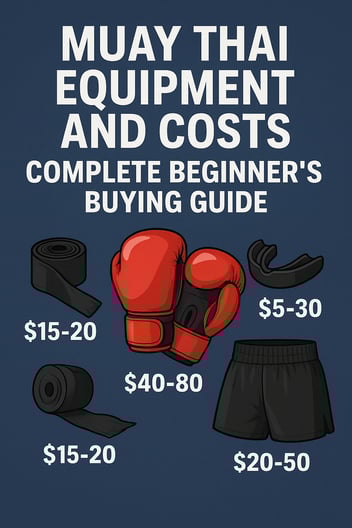
- Essential gear: Gloves ($40-100), hand wraps ($10-20), training clothes ($20-50)
- Protective equipment: Shin guards ($30-80), mouthguard ($5-30), groin protection ($20-40)
- Optional equipment: Thai shorts ($25-50), personal thai pads ($80-150), headgear ($40-100)
- Replacement costs: Gear wears out and requires periodic replacement
Some gyms require purchasing equipment through them at marked-up prices. Being required to purchase specific gear only from the gym or being criticized for wearing equipment from elsewhere signals McDojo practices. Legitimate gyms allow you to buy equipment wherever you choose.
Total first-year costs typically include monthly membership fees, initial equipment purchase ($150-300 depending on quality choices), and potential replacement items. Budget $1,500-3,000+ for your first year depending on training frequency and equipment choices.

Hidden Fees and Mandatory Charges
Be aware that some gyms charge sign-up fees of $75 or more beyond monthly membership costs. These might be legitimate covering administrative costs, or they might be revenue-padding that better-run gyms avoid.
Potential hidden costs to clarify:
- Registration or enrollment fees: One-time charges when joining
- Annual renewal fees: Yearly charges to maintain membership
- Testing or promotion fees: Charges for rank advancement (red flag in Muay Thai)
- Mandatory equipment purchases: Required buying specific brands from gym
- Cancellation penalties: Fees for ending membership
- Class reservation fees: Charges for booking specific classes
- Locker rental: Ongoing costs for storage space
During initial inquiries, ask explicitly: "What is the total cost for the first three months including all fees and required equipment?" Transparent gyms answer straightforwardly. Evasive responses or "it depends" without clarification suggests hidden costs you'll discover later.
Contract Terms and Cancellation Policies
Long-term contracts benefit gyms financially but can trap students in arrangements that no longer serve them. Contract length and cancellation terms reveal whether gyms prioritize student experience or revenue protection.
Fair membership policies:
- Month-to-month options without long-term commitments
- Clear cancellation procedures with reasonable notice (5-30 days)
- No penalties for canceling beyond final month payment
- Freeze options for temporary breaks due to injury or travel
- Transparent refund policies for prepaid periods
Predatory contract practices:
- Mandatory 6-12 month initial contracts
- Automatic renewal without explicit reauthorization
- Substantial cancellation penalties
- Difficulty accessing cancellation procedures
- Pressure tactics during signup discouraging reading terms
Month-to-month memberships that auto-renew with no contracts represent standard fair practice. Green-flag gyms recognize students as free agents, understanding they train where they want because they enjoy it, not through ownership demands.
Value Assessment Beyond Price
Cheapest isn't always best value. Consider what you receive for membership costs:
Value factors to consider:
- Instruction quality: Excellent coaching justifies higher prices
- Class availability: More class options create better value
- Facility quality: Clean, well-maintained spaces add value
- Community and culture: Supportive environments increase value
- Location convenience: Nearby gyms save travel time and costs
- Additional offerings: Strength training, flexibility classes, open gym access
A gym charging $200 monthly with exceptional instruction, great culture, and convenient location often delivers better value than a $100 gym with mediocre teaching, poor atmosphere, and 45-minute commute. Calculate value per training session based on realistic attendance frequency, not unlimited access you won't use.
Red Flags Beginners Often Miss
Certain warning signs indicate problematic gyms, but beginners often overlook them due to inexperience or wishful thinking. Learning to recognize these red flags helps you avoid wasting time and money on unsuitable or even dangerous training environments.
Unqualified or Inexperienced Instructors
The biggest red flag is instructors who lack proper credentials, verifiable fight experience, or proven teaching track records. Lack of professional fight experience and only a couple years of training experience are serious red flags.
Warning signs of unqualified instruction:
- Vague or unverifiable claims about training background
- Inability to explain technique reasoning beyond "that's how I learned it"
- Self-awarded titles without legitimate organizational recognition
- No lineage connection to established Muay Thai traditions
- Recently started training themselves (2-3 years) now teaching
Don't confuse charisma or confidence with competence. Some excellent salespeople and motivational speakers know very little about proper Muay Thai technique but convince beginners through force of personality.
Ask directly: "Can you tell me about your training background? Where did you learn? How long have you been teaching?" Legitimate instructors answer readily with specific details. Evasive responses or defensive attitudes signal problems.
Lack of Liability Insurance and Legal Protections
Legitimate gym operations carry liability insurance protecting both the business and students in case of injuries. Gyms without insurance either cannot afford it (financial instability) or cannot obtain it (too many claims from injuries).
Insurance and safety concerns:
- Gym unwilling or unable to confirm liability insurance coverage
- No waivers or safety documentation for students to sign
- Unclear emergency procedures if injuries occur
- No first aid equipment or trained personnel
- Resistance to questions about insurance or safety protocols
When gyms lack policies for handling sexual misconduct or other serious issues, victims often leave rather than receive protection. Ask directly about insurance and safety policies during initial visits. Legitimate operations have these systems in place and discuss them openly.
Aggressive Ego-Driven Training Culture
Some gyms cultivate toxic competitive cultures where students constantly try to dominate each other, training becomes about proving toughness rather than learning, and injuries are worn as badges of honor rather than prevented systematically.
Toxic culture indicators:
- Students regularly trying to "win" during technical drills
- Aggressive uncontrolled sparring treated as normal
- Injuries dismissed as weakness rather than addressed
- Constant bragging about pain tolerance or toughness
- Mockery of students who train conservatively or decline sparring
Gyms with sparring that looks like all-out fighting every session indicate a "winning at all costs" mentality leading to injuries, burnout, and toxic atmosphere. Watch carefully how students interact during partner work and sparring. Competitive intensity should exist only in designated contexts with proper controls, not pervade all training.
McDojo Business Practices and Belt Systems
Traditional Muay Thai has no belt ranking system. Gyms that implement colored ranking systems with mandatory testing fees are borrowing McDojo tactics from karate schools.
McDojo warning signs:
- Colored belt, shirt, or shorts ranking systems
- Mandatory testing fees for advancement
- Pressure to purchase specific branded equipment only from the gym
- Long-term mandatory contracts with substantial cancellation penalties
- Constant upselling of seminars, private lessons, or "premium" programs
- Promises of rapid advancement or guaranteed outcomes
McDojos focus on tiered learning requiring payment to unlock "advanced" techniques and mandatory grading tests with colored ranking systems. These business practices prioritize revenue over student development and indicate the gym views you primarily as a revenue source rather than a student.
High Turnover and Consistent Beginner Demographics
Visit a gym multiple times over several weeks. If the student body consists almost entirely of beginners with very few intermediate or advanced practitioners, investigate why. High turnover suggests:
- Poor instruction that doesn't develop skills adequately
- Toxic culture that drives students away
- Injuries common enough to scare people off
- Pricing that captures initial interest but loses long-term students
- Unrealistic difficulty or inappropriate programming for stated goals
Successful gyms have students at various skill levels with core groups training consistently for years. If everyone always seems new, something prevents retention.
Discriminatory Attitudes and Unwelcoming Behavior
Subtle discrimination often flies under beginners' radar initially but creates environments where certain groups never feel genuinely welcome.
Discrimination warning signs:
- Homogeneous student body despite diverse surrounding community
- Different treatment based on gender, age, or appearance
- "Jokes" targeting specific groups treated as acceptable
- Women training in isolation or leaving immediately after classes
- Hostile responses to questions about inclusivity
- Exclusionary cliques that ignore newcomers
Gyms should be accessible to people of all ages, genders, and fitness levels—unwelcoming atmospheres signal prioritization problems. If you're part of a group that seems underrepresented at a gym, pay attention to how you're treated and whether you see people like you training there long-term.
Poor Hygiene and Facility Maintenance
Cleanliness and maintenance reveal gym professionalism and concern for student health. Combat sports involve close contact, shared equipment, and exposure to sweat—hygiene is essential.
Hygiene red flags:
- Dirty training mats that smell of mildew or old sweat
- Bathrooms that are consistently filthy
- Communal equipment never cleaned between users
- Visible mold, water damage, or pest problems
- No cleaning supplies or protocols visible
- Staff unconcerned about cleanliness issues
If a gym looks like a frat house rather than a professional training environment, that's a major red flag. Poor hygiene increases infection risk and signals broader operational problems. Legitimate operations maintain clean facilities as basic professional standards.
Resistance to Questions or Trial Classes
Gyms confident in their instruction, culture, and operations welcome questions and encourage trial periods. They want you to make informed decisions because satisfied students stay longer and refer others.
Red flags in communication:
- Defensive or hostile responses to reasonable questions
- Pressure to commit immediately without trying classes
- Refusal to allow observation or trial periods
- Vague answers about pricing, policies, or instructor credentials
- Hard sell tactics focused on closing membership rather than fit
- Limited transparency about class structure or progressions
If you feel pressured, uncomfortable, or like you're being sold rather than informed, trust that instinct. Quality gyms earn your business by demonstrating value, not pressuring quick decisions.
Trial Classes: Maximizing Your Observation and Decision-Making
Trial classes provide invaluable information you cannot get from websites, phone calls, or facility tours. Use this opportunity strategically to evaluate whether a gym genuinely matches your needs.
Scheduling and Preparing for Trial Classes
Most gyms offer free or low-cost trial options. Some gyms require semi-private intro sessions teaching fundamentals and class structure for all new students regardless of experience level, while others allow drop-ins to regular classes. Complete 90-minute trial classes alongside regular group sessions provide authentic experiences rather than just "samples".
Preparation for trial classes:
- Schedule trials at times you would normally train (assess realistic attendance)
- Wear comfortable athletic clothing allowing full range of motion
- Bring water bottle, towel, and extra shirt for sweating
- Arrive 15-20 minutes early for orientation and questions
- Bring notebook to record observations immediately after class
- Be well-rested, hydrated, and avoid heavy meals beforehand
Some gyms provide gloves for trial use; others require you to bring your own or rent them. Clarify equipment policies when scheduling to avoid surprises.
What to Observe During Class
Beyond experiencing the workout itself, use trial classes to observe specific indicators of gym quality and cultural fit.
Instructor behavior to evaluate:
- How clearly do they explain techniques and progressions?
- Do they circulate and provide individual corrections?
- How do they handle students who don't understand initially?
- Are explanations patient or dismissive?
- Do they demonstrate both correct and incorrect forms?
- How do they manage class pacing for varying fitness levels?
Quality instructors take time to break things down and give one-on-one instruction within group class settings, making training challenging while still fun and educational.
Student interactions to notice:
- How do experienced students treat beginners?
- Is partner work collaborative or competitive?
- Do students help each other or focus only on themselves?
- What's the energy—supportive camaraderie or tense competition?
- Do people seem to genuinely enjoy training or just endure it?
- Are there visible cliques or does everyone interact inclusively?
Training environment assessment:
- Is equipment well-maintained and adequate for class size?
- Are facilities clean and professionally maintained?
- Does the space feel safe and organized?
- Is the class size manageable for the coaching staff?
- Do safety protocols seem systematic or haphazard?
Questions to Ask Coaches and Students
Come prepared with specific questions that reveal information beyond surface-level marketing.
Questions for instructors:
- What's your training background and teaching experience?
- How do you structure progressions for beginners?
- When do students typically start sparring, and what are the protocols?
- What's your injury prevention philosophy?
- How do you accommodate different goals (fitness vs competition)?
- What happens if I need to modify training due to limitations?
Questions for current students (often more revealing than coach answers):
- How long have you been training here?
- What made you choose this gym over others?
- How would you describe the gym culture?
- Have you trained elsewhere? How does this compare?
- What do you wish you'd known before starting?
- What would you change about the gym if you could?
Long-term students provide the most valuable perspectives. If you notice most students are beginners, ask why—the answer reveals retention quality.
Trusting Your Gut Feeling
Beyond objective evaluation criteria, pay attention to your subjective emotional response. Do you feel welcome and comfortable? Do you leave excited to return or relieved it's over? Can you imagine training here regularly?
Your gut feeling incorporates subtle cues your conscious mind might miss—tone of interactions, facial expressions, body language, energy in the space. If something feels off but you cannot articulate why, trust that instinct.
Some discomfort is normal when trying something new and physically demanding. Distinguish between "nervous about the challenge" discomfort and "something here isn't right" discomfort. The first diminishes with familiarity. The second indicates genuine incompatibility.
Comparing Multiple Gyms Before Deciding
If possible, try 2-4 different gyms before committing. Direct comparison reveals differences you might not notice evaluating gyms in isolation.
Comparison criteria:
- Which gym's instruction style resonated most with your learning preferences?
- Where did you feel most welcome and comfortable?
- Which gym's culture aligned best with your personality and goals?
- Where do you realistically see yourself training consistently?
- Which pricing model fits your budget without financial stress?
The "best" gym isn't universal—it's the one that best matches your specific needs, preferences, circumstances, and goals. A gym perfect for someone else might be completely wrong for you.
Conclusion: Choosing Your Muay Thai Gym That Matches Your Goals
Choosing the right Muay Thai gym ranks among the most important decisions in your martial arts journey—more impactful than your natural athleticism, prior fitness level, or initial technique. The right gym provides skilled instruction that builds proper fundamentals, safety protocols that prevent injuries, supportive culture that maintains motivation, and appropriate progression that matches your goals and capabilities.
The wrong gym wastes your money, risks your physical safety, develops bad habits requiring years to unlearn, or creates negative experiences that turn you away from Muay Thai entirely. Some people quit martial arts not because Muay Thai wasn't right for them, but because their gym wasn't right for their needs.
This decision requires investment of time and critical evaluation—visiting multiple facilities, observing classes, asking probing questions, and honestly assessing fit rather than choosing based on convenience or flashy marketing. The closest gym might not be your best option. The cheapest membership might cost more in poor instruction and potential injuries. The most impressive social media presence might mask problematic culture.
Your ideal gym matches your actual goals and circumstances:
- If you seek authentic traditional training, find gyms with legitimate Thai lineage and cultural emphasis
- If fitness is your priority, find gyms with structured conditioning programs and supportive fitness-focused culture
- If you have competitive ambitions, find gyms with proven fighter development records
- If you need flexibility, find gyms with multiple class times and flexible membership options
- If community matters, find gyms with active social environments and welcoming culture
Don't force yourself into someone else's ideal gym. The gym that produces champions might be terrible for recreational practitioners. The fitness-focused gym your friend loves might bore you if you want technical depth. Find your match, not the gym with the most Instagram followers.
Once you've identified strong candidates, trust your trial class experiences. The gym where you felt most comfortable, learned most effectively, and left excited to return is likely your best choice—even if it doesn't check every theoretical box on your evaluation list.
Making your final decision:
- Complete trial classes at your top 2-4 options
- Evaluate objectively using criteria from this guide
- Assess subjectively based on comfort and excitement
- Start with month-to-month membership avoiding long contracts
- Reassess after 2-3 months of actual training experience
Your needs may evolve as you progress. The beginner-friendly gym that was perfect initially might not serve your intermediate goals two years later. That's normal. Starting somewhere appropriate for current needs beats waiting for the theoretically perfect gym.
Remember: you can change gyms if your first choice doesn't work out. Month-to-month memberships provide flexibility to correct selection mistakes without major financial loss. Don't let fear of choosing wrong prevent choosing at all.
The right Muay Thai gym for you exists. It might take time to find it. The search process is worthwhile because training in an environment that genuinely suits you transforms Muay Thai from a temporary experiment into a sustainable long-term practice.
Now that you understand how to evaluate and select a gym, your next step involves understanding what equipment you actually need and how to avoid common beginner mistakes once you start training.
Frequently Asked Questions About Choosing a Muay Thai Gym
Q: How much should I expect to pay for Muay Thai gym membership?
Monthly Muay Thai gym pricing typically ranges from $100-250 in most US markets, with higher costs in major cities. Be wary of gyms charging enrollment fees, mandatory long-term contracts, or testing fees—these often signal McDojo practices. Legitimate gyms offer month-to-month options with 30-day cancellation notice and no hidden costs beyond monthly membership.
Q: What is a good student-to-coach ratio for beginner Muay Thai classes?
The ideal student-to-coach ratio is 8-12 students per instructor for quality beginner instruction. Ratios up to 15-18 students can work if structured with partner work and rotating attention. Classes with 20+ students per single coach struggle to provide adequate individual correction and technique feedback that beginners need.
Q: Should I choose a gym with fighters or one focused on fitness?
This depends entirely on your goals. If you want authentic technique and potentially competitive training, choose gyms with active fighters. If your priority is fitness, weight loss, and recreational training without fighting pressure, fitness-focused gyms may suit you better. Many hybrid gyms offer multiple training tracks accommodating both approaches within one facility.
Q: How do I know if a Muay Thai trainer is qualified?
Look for verifiable fight records or extensive coaching backgrounds with proven student development. Quality instructors have specific details about their training lineage, clear connections to recognized Thai trainers or established gyms, and multiple years of teaching experience. Be skeptical of vague claims, self-awarded titles, or inability to discuss their background specifically.
Q: What red flags should I watch for when visiting Muay Thai gyms?
Major warning signs include unqualified instructors lacking verifiable credentials, lack of liability insurance, aggressive ego-driven sparring culture, McDojo practices like belt systems and mandatory testing fees, poor hygiene and equipment maintenance, discriminatory attitudes, and resistance to questions or trial classes. Gyms confident in their operations welcome scrutiny and encourage informed decisions.