

Quick Takeaways
- Physical readiness matters: You need basic cardiovascular endurance (20-30 minutes of moderate activity) and functional movement patterns, but you don't need to be in elite shape to start
- Mental discipline trumps natural talent: Consistency, coachability, and tolerance for discomfort determine success more than athletic ability
- Lifestyle compatibility is crucial: Training 2-3 times weekly requires 4-9 hours of total time commitment including travel, plus adequate sleep (7-9 hours) and nutrition for recovery
- Age and body type are overrated concerns: People of all ages, shapes, and athletic backgrounds can train successfully when they match their approach to their capabilities
- Know your training motivation: Whether you seek fitness, recreational skill development, or competition determines which gym culture and training intensity suits you best
- Common fears (pain, injury, embarrassment) are manageable: Proper coaching, gradual progression, and supportive gym environments address most beginner concerns
- Some situations warrant waiting: Acute injuries, uncontrolled medical conditions, severe time constraints, or mental health crises may make "not right now" wiser than forcing training into an unsustainable lifestyle
Introduction: Why Self-Assessment Matters Before Starting Muay Thai
You're standing outside a Muay Thai gym, watching through the window as fighters throw thunderous kicks and lightning-fast combinations. The excitement pulls you forward, but uncertainty holds you back. You're asking yourself the most important question: Is Muay Thai right for me?
This isn't about proving your toughness or meeting someone else's standard of worthiness. It's about honestly evaluating whether this particular martial art—with its specific physical demands, mental requirements, and lifestyle implications—aligns with who you are, what you want, and what you can sustainably maintain.
Unlike signing up for a standard gym membership where you can coast through workouts at your own pace, committing to Muay Thai means entering a training system that will test your cardiovascular capacity, challenge your ego, require consistent mental engagement, and demand significant time and recovery resources. Some people thrive under these conditions. Others discover the commitment doesn't match their current life circumstances or personal preferences.
Neither outcome reflects your value as a person. Different activities suit different people at different stages of their lives. A runner isn't superior to a swimmer, and someone who loves Brazilian Jiu-Jitsu isn't more dedicated than someone who prefers yoga. They've simply found activities that match their personalities, goals, and circumstances.
This comprehensive self-assessment guide helps you evaluate your readiness across multiple dimensions: physical capacity, mental approach, lifestyle compatibility, personality fit, and personal goals. You'll gain realistic expectations about what Muay Thai training entails, identify potential obstacles before they become problems, and make an informed decision about whether this is the right time and the right martial art for you.
The result? If you decide to start training, you'll enter with eyes wide open, prepared for the challenges ahead, and positioned for long-term success. If you decide to wait or choose a different path, you'll have saved yourself frustration, potential injury, and wasted resources. Either way, you'll have made a decision based on self-awareness rather than impulse or pressure.
Understanding What Muay Thai Actually Demands from Beginners
The Reality of Muay Thai Training Intensity
Muay Thai for beginners isn't a gentle introduction to martial arts. While good gyms accommodate varying fitness levels, the training itself remains inherently intense. A typical beginner class runs 60-90 minutes with minimal rest periods. You'll spend those minutes jumping rope, shadowboxing, hitting pads, working the heavy bag, practicing combinations with partners, and finishing with conditioning drills that push your limits.
The "Art of Eight Limbs" utilizes punches, kicks, elbows, and knees—requiring full-body coordination, explosive power, and sustained cardiovascular output. Unlike isolated gym exercises where you can modify intensity on the fly, Muay Thai training moves at a group pace. When your coach calls for three-minute rounds on the heavy bag, you're expected to work for those full three minutes.
This doesn't mean you'll be thrown into advanced sparring on day one. Reputable gyms structure beginner programs with appropriate progressions. But even fundamental technique training is physically demanding. Throwing a proper roundhouse kick requires hip rotation, core engagement, balance, and leg strength. Executing a basic one-two combination while maintaining defensive posture taxes your shoulders, engages your core, and tests your breathing control.
The Cumulative Nature of Training Adaptations
Your body doesn't transform after one session. Muay Thai progress requires consistent training over weeks and months, during which accumulated stress triggers adaptations. Your shins will bruise before they condition. Your forearms will ache from checking kicks before they toughen. Your cardiovascular system will struggle before it strengthens. Your techniques will feel awkward and uncomfortable before they become natural.
This adaptation period challenges many beginners who expect linear improvement. Some days you'll feel stronger than before. Other days you'll feel like you've regressed. Your body will be sore in unexpected places. You'll discover muscles you didn't know existed. This is normal, expected, and necessary—but it requires patience and perspective that not everyone possesses or wants to develop.
Technical Complexity and Learning Curves
Muay Thai techniques appear simple when watching experienced practitioners. A roundhouse kick looks straightforward: lift your leg and swing it around. In reality, proper execution requires specific hip positioning, foot pivoting, arm countering for balance, breathing coordination, and target tracking—all happening simultaneously in under a second.
Beginners must learn dozens of distinct techniques, each with multiple components that must be coordinated precisely. Then they must learn to chain these techniques into combinations. Then they must learn to perform combinations while moving, while defending, while fatigued, while an opponent counters. The learning curve is steep and long.
Some people find this complexity intellectually engaging. Others find it frustrating. Neither response is wrong, but recognizing which camp you fall into helps predict whether starting Muay Thai will be rewarding or demoralizing for you.
Physical Readiness Assessment: Do You Have the Foundation?
Cardiovascular Capacity - The Non-Negotiable Foundation
Can you sustain 20-30 minutes of moderate cardiovascular activity—walking briskly uphill, light jogging, cycling, swimming—without stopping to catch your breath? This represents the minimum cardiovascular foundation for beginner Muay Thai training.
Why this threshold? Because even with accommodations for fitness levels, you need sufficient cardiovascular capacity to participate safely. Heart rate spikes during Muay Thai training aren't gradual—you go from rest to high intensity quickly. Your first warm-up might include three minutes of jump rope followed immediately by shadowboxing. Without baseline cardiovascular capacity, you're not just uncomfortable; you're at risk for cardiac distress.
If three flights of stairs leave you severely winded, if a ten-minute walk around your neighborhood feels challenging, or if you haven't done any cardiovascular activity in years, spend 3-4 weeks building basic fitness before your first class. Walk daily, increasing duration and pace gradually. Add light jogging intervals. Use a stationary bike. The goal isn't to arrive in peak condition—just to establish a foundation that makes training safe and productive rather than dangerous and miserable.
Functional Strength and Movement Patterns
You don't need to be strong to start Muay Thai. The training itself builds strength. However, severe weakness or significant strength imbalances increase injury risk, particularly in your knees, shoulders, lower back, and ankles—all areas stressed by striking movements.
Basic functional strength markers include:
- Holding a forearm plank with proper form for 30-45 seconds
- Performing 10-15 bodyweight squats with full depth and control
- Completing 5-10 push-ups with straight body alignment
- Standing on one leg for 30 seconds without excessive wobbling
These aren't high standards. They simply indicate your body can support itself through basic movement patterns. If these tasks are currently impossible, spending 3-4 weeks on basic strength development—bodyweight exercises, resistance bands, light dumbbells—significantly reduces early injury risk.
Muay Thai movements involve rotational power, single-leg balance, explosive hip extension, and overhead reach. If your body cannot perform these patterns under control with minimal load, adding the speed and impact of striking creates problems.
Flexibility and Mobility - Understanding the Difference
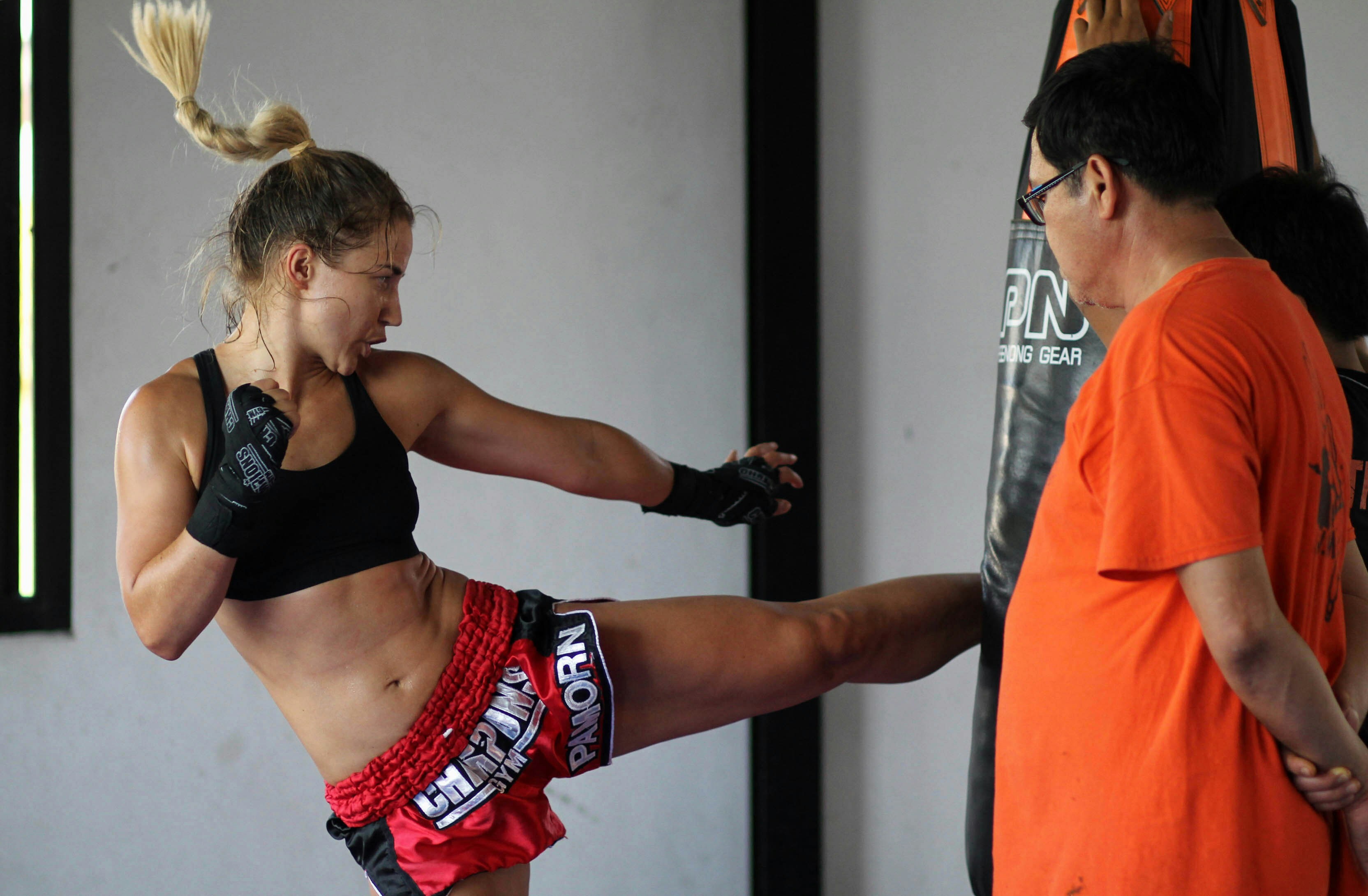
Many beginners worry they're not flexible enough for Muay Thai. They see fighters throwing head kicks and assume extreme flexibility is required. This is false. Head kicks are advanced techniques requiring months or years of development. Beginner training emphasizes mid-level kicks, basic punches, and fundamental movement—none requiring gymnast flexibility.
What matters more than flexibility is mobility: your ability to move through functional ranges of motion under control. Can you sit in a deep squat comfortably? Can you raise your knee to hip height without excessive compensation? Can you rotate your torso smoothly without pain or restriction? Can you lift your arms overhead without your lower back arching excessively?
Mobility allows proper technique execution and reduces injury risk. Tight hips restrict kick mechanics, forcing compensations that strain your knees and lower back. Stiff shoulders limit punch extension and defensive movements. Limited ankle mobility affects balance and stance stability.
If you struggle with basic mobility, dedicating 10-15 minutes daily to mobility work for 2-3 weeks before starting training pays massive dividends. Focus on hip openers, hamstring stretches, shoulder circles, ankle rotations, and thoracic spine mobility. YouTube has thousands of free mobility routines specifically for martial arts.
Pre-Existing Injuries and Medical Conditions - Honesty Prevents Disasters
Muay Thai training involves repetitive impact, rotational stress, explosive movements, and sustained cardiovascular demand. Old injuries often resurface under these conditions. Conditions you've been managing successfully in normal life may become problematic under training stress.
Be ruthlessly honest about your injury history:
- Knee injuries (ligament tears, meniscus damage, chronic pain): Kicking and pivoting movements stress knees significantly
- Ankle instability (repeated sprains, chronic weakness): Footwork and balance demands may trigger reinjury
- Shoulder problems (rotator cuff damage, impingement, instability): Punching mechanics and defensive movements load shoulders repeatedly
- Back issues (herniated discs, chronic pain, sciatica): Rotational power generation and impact absorption stress the spine
- Cardiovascular conditions (uncontrolled hypertension, arrhythmias, prior heart events): High-intensity training creates cardiac demands
These conditions don't automatically disqualify you from Muay Thai, but they require careful management. Communicate clearly with coaches about limitations. Modify techniques when necessary. Accept that some training aspects may remain off-limits. Consider getting medical clearance from physicians who understand combat sports demands—not all doctors appreciate the difference between general exercise and Muay Thai intensity.
Many people train successfully with old injuries by working intelligently within their limitations. But attempting to hide injuries or train through pain signals leads to catastrophic setbacks that could end your training permanently.
Mental and Psychological Readiness for Muay Thai Training
Self-Discipline and Internal Motivation - No One Tracks Your Progress
Muay Thai gyms rarely coddle beginners with attendance tracking, progress monitoring, or motivational check-ins. You pay your membership, attend classes when you choose, and train as hard or easy as you prefer. No one calls when you miss a week. No coach tracks whether you're improving. Your engagement level is entirely your responsibility.
This freedom appeals to self-directed individuals but challenges people who require external accountability. Ask yourself honestly: Can you commit to attending 2-3 classes weekly for at least three months, even when you're tired, sore, unmotivated, or busy? Can you maintain consistent effort during classes when no one is watching whether you're working hard or going through the motions?
Training Muay Thai isn't Netflix—you can't pause when it becomes inconvenient then resume later without consequences. Skills deteriorate when you skip weeks. Conditioning evaporates after ten days of inactivity. Technique refinement requires regular repetition. If you struggle with self-discipline or require structured accountability, consider whether the self-directed nature of Muay Thai training suits your personality.
Tolerance for Sustained Physical Discomfort
Muay Thai training hurts. Not in dangerous ways—when proper technique and safety protocols are followed—but in the uncomfortable ways that pushing your body beyond its current capabilities always hurts:
- Your shins will bruise from checking kicks and hitting bags
- Your forearms will ache from blocking strikes
- Your lungs will burn during high-intensity rounds
- Your muscles will be sore for days after training
- Your feet and hands will develop calluses and minor abrasions
- Your core will fatigue from maintaining defensive posture
This isn't suffering for its own sake. It's the natural result of physical adaptation. Your body responds to training stress by becoming tougher, stronger, and more resilient. But the adaptation period involves significant discomfort.
Some people accept this discomfort as necessary and even satisfying—proof of productive training. Others find sustained physical discomfort unbearable regardless of the purpose. Neither response is superior, but recognizing your tolerance level helps predict whether beginner Muay Thai will feel like a worthwhile challenge or unbearable misery.
You will eventually learn to distinguish productive discomfort (muscle fatigue, cardiovascular strain, technique-related soreness) from harmful pain (sharp joint pain, muscle tears, injury signals). But early training before you've developed this discernment can be confusing and uncomfortable.
Coachability and Ego Management - Accepting Correction Without Defensiveness
During your Muay Thai journey, you'll receive constant technical correction. Coaches will adjust your stance repeatedly. Training partners will point out flaws in your combinations. You'll watch yourself in mirrors looking awkward and uncoordinated. You'll drill the same basic jab-cross combination for weeks while barely seeing improvement.
Your ability to receive criticism without defensiveness, to repeat seemingly simple drills hundreds of times without boredom, and to train alongside significantly more skilled people without feeling inadequate determines your success more than natural athleticism.
Muay Thai has immense technical depth that takes years to master. During those years, you're a perpetual student receiving regular feedback on what you're doing wrong. If you interpret correction as personal criticism, if you need constant validation of your progress, or if training around more skilled practitioners makes you feel inadequate, Muay Thai will challenge your ego in uncomfortable ways.
This ego challenge benefits many people—learning to accept criticism gracefully and compete only with your past self builds character. But it frustrates others who prefer activities where their competence isn't constantly highlighted as insufficient.
Patience with Non-Linear Progress - Years Not Months
Modern fitness culture promises rapid results: 30-day challenges, six-week transformations, fast-track certification programs. Muay Thai operates on completely different timelines:
- 3-6 months of consistent training to become comfortable with basic combinations
- 6-12 months before sparring readiness in most gyms
- 1-2 years to develop solid fundamental technique
- 3-5 years to achieve technical proficiency
- Continuous refinement even for experienced practitioners
Progress isn't linear. Some weeks you'll feel dramatic improvement. Other weeks you'll feel like you're regressing. Techniques that seemed mastered last month feel awkward again this month. Your conditioning plateaus despite consistent training. You develop bad habits that must be corrected. Injuries force setbacks.
If you need visible progress markers every week or month to stay motivated, Muay Thai's gradual development curve may frustrate you. The improvements are real—your balance incrementally improves, combinations become slightly smoother, conditioning slowly increases, technique becomes more natural—but they're often too subtle to notice day-to-day or even week-to-week. Appreciating these small gains requires patience and long-term perspective.
Lifestyle Compatibility: Does Muay Thai Fit Your Real Life?
True Time Commitment - Beyond the Hour in the Gym
A single Muay Thai training session isn't just the 60-90 minutes in the gym. Factor in travel time both ways, changing before class, showering and changing after class, post-training recovery time, and the mental transition period needed to show up focused and ready to train.
For most people, each training session represents 2-3 hours of total disruption to their daily schedule. Training 2-3 times weekly means dedicating 4-9 hours of your week to Muay Thai, not including any additional conditioning, mobility work, or recovery practices you might add.
If you're working 60-hour weeks, managing young children, caring for elderly relatives, or juggling multiple significant commitments, finding 4-9 hours consistently becomes difficult. Weekend warrior approaches—training intensely when convenient, then skipping weeks—don't work well for skill development or injury prevention. Consistency matters more than occasional intensity.
Be realistic about your actual available time, not your theoretical available time. If your schedule is already packed with commitments you cannot reduce or eliminate, adding Muay Thai training means something else must give. What will that be?
Sleep and Recovery Requirements - Non-Negotiable for Progress
Muay Thai training creates significant recovery demands. The combination of cardiovascular stress, impact absorption, central nervous system fatigue from learning complex motor patterns, and muscular damage from unfamiliar movements requires adequate sleep for your body to process, adapt, and rebuild.
If you're currently sleeping 5-6 hours nightly due to work demands, young children, or lifestyle choices, adding intense physical training will likely:
- Degrade your performance in other life areas
- Increase injury risk dramatically
- Slow skill acquisition and technique learning
- Weaken your immune system
- Tank your motivation and mental resilience
- Lead to burnout within weeks
Most people training Muay Thai regularly need 7-9 hours of quality sleep to recover adequately. Without sufficient sleep, you're not building on previous training sessions—you're digging yourself into a recovery deficit that eventually manifests as illness, injury, or complete burnout.
Training tired isn't noble or character-building. It's counterproductive and potentially dangerous. Your reaction times slow, your decision-making deteriorates, your technique becomes sloppy, and your injury risk skyrockets. If your current lifestyle doesn't support adequate sleep, either modify your lifestyle or wait to start training until circumstances allow proper recovery.
Nutritional Requirements and Eating Patterns
You don't need a perfect diet to train Muay Thai, but you do need adequate nutrition to fuel training sessions and support recovery. The caloric demands of consistent training are substantial—an hour of moderate-intensity Muay Thai burns 600-800 calories for most people.
If you're not eating enough to support this energy output, you'll experience:
- Energy crashes during training
- Inability to maintain training intensity
- Poor recovery between sessions
- Increased illness frequency
- Potential development of disordered eating patterns
- Stalled progress despite consistent training
Similarly, if your current diet consists primarily of highly processed foods, excessive alcohol consumption, or severe caloric restriction, adding intense physical training will quickly expose these inadequacies through decreased performance, frequent illness, or injury.
You don't need to overhaul your entire diet before starting Muay Thai. But you should be prepared to eat adequately and consistently to support training demands. This means regular meals with sufficient protein for muscle repair, adequate carbohydrates for energy, healthy fats for hormonal function, and plenty of whole foods for micronutrients.
If you struggle with disordered eating patterns, extreme dietary restrictions, or unhealthy relationships with food, adding high-calorie-burn training may worsen these issues. Consider addressing nutritional and psychological relationships with food before adding significant physical training demands.
Work Schedule and Physical Demands of Daily Life
Muay Thai training requires consistency, which means your work schedule significantly impacts your ability to train regularly. If you travel extensively for work, work irregular shifts with unpredictable changes, or face frequent emergency demands that disrupt your schedule, maintaining the regular training frequency needed for skill development becomes challenging.
Some people manage this successfully by training intensively during available periods and accepting slower overall progression. But it requires realistic expectations and acceptance that your development will lag behind people training more consistently.
Your work's physical demands also matter. If your job involves significant physical labor, long periods of standing, heavy lifting, or other demanding physical activity, your recovery capacity is more limited than someone with a sedentary desk job. This doesn't mean you cannot train Muay Thai, but it may mean starting with lower frequency or intensity until your body adapts to combined demands.
Age, Body Type, and Athletic Background: Dispelling Common Myths
Age Is Far Less Limiting Than You Think
You've probably heard that starting Muay Thai after 30, or 40, or 50 is too late. This is categorically false for recreational or fitness-focused training. Many successful hobbyist practitioners start in their 30s, 40s, 50s, and beyond. What changes with age isn't whether you can train, but how you should approach training.
Older beginners typically need:
- More recovery time between training sessions
- Additional mobility and flexibility work
- More conservative approaches to sparring intensity
- Greater attention to injury prevention protocols
- Acceptance of longer progression timelines compared to younger trainees
Your progression may be slower than a 22-year-old's, but progression still occurs. Your technique can become excellent. Your fitness can improve dramatically. Your understanding of Muay Thai principles can be deep and sophisticated.
If your goal is professional competition at elite levels, starting in your late 30s or beyond presents obvious challenges. For every other training path—fitness, recreational skill development, amateur competition, personal challenge—age is far less limiting than mindset and approach.
The real limitation comes from comparing yourself to young competitors, refusing to modify training appropriately for your age, or expecting your body to recover like it did in your 20s. Train intelligently within your body's capabilities, and age becomes a minor factor rather than a disqualifying one.
Every Body Type Has Advantages in Muay Thai
"I'm too tall," "I'm too short," "I'm too heavy," "I'm too thin"—every body type finds reasons why Muay Thai supposedly isn't suited for them. In reality, Muay Thai accommodates every body type because different physical builds have different strategic advantages:
- Tall fighters: Use reach advantages, teep control, long-range kicks
- Short fighters: Excel at close range, powerful hooks, devastating low kicks
- Heavier bodies: Generate enormous power in strikes, strong clinch control
- Lighter builds: Offer speed advantages, superior endurance, excellent mobility
What matters isn't your build but whether you're willing to learn how to fight from your body type rather than trying to fight like someone built differently. Your technique, strategy, and approach should leverage your physical attributes, not fight against them.
The genuine consideration is whether you're at a weight that allows safe, sustainable training. Extreme obesity creates joint stress and cardiovascular demands that may require weight loss before beginning impact training. Severe underweight may indicate inadequate nutrition to support training demands.
But the vast middle range of body types—which encompasses most people—all work fine for Muay Thai. Your success depends on finding coaches who understand how to develop fighters of your body type and being willing to embrace your physical reality rather than wishing you were built differently.
Previous Sports Background: Advantage or Handicap?
Former athletes often assume their sports background provides significant advantages in Muay Thai. Sometimes this is true. Sometimes not. And sometimes previous sports create challenges that must be unlearned.
Athletic backgrounds that transfer well:
- Wrestling, judo, boxing: Share fundamental attributes like balance, timing, contact comfort, competitive mindset
- Dance, gymnastics: Provide excellent body awareness, coordination, movement quality
- Team sports (basketball, soccer, football): Build general athleticism, cardiovascular fitness, competitive experience
Athletic backgrounds requiring significant adaptation:
- Soccer players: Often have terrible boxing form due to leg-dominant power generation habits
- Bodybuilders: May lack mobility, endurance, and movement patterns Muay Thai requires
- Powerlifters: Strong but often inflexible, lacking cardiovascular fitness for sustained striking
No athletic background: This isn't a disadvantage—it simply means you're starting from zero like many others. Muay Thai is designed as a complete system that builds necessary attributes through training. You may progress slower initially than former athletes, but you also don't have bad habits to unlearn.
The key is approaching training with beginner's mind regardless of your athletic history, recognizing that Muay Thai is a new skill set requiring its own learning curve. Your marathon running experience won't make you good at throwing kicks. Your baseball background won't translate to elbow strikes. Leave your ego at the door and be willing to be genuinely new at something.
Personality Fit: Competitive vs. Recreational Training Mindsets
The Recreational Practitioner - Training Without Fighting
Many people train Muay Thai purely for fitness benefits, stress relief, skill development, and the satisfaction of improving at a complex martial art. They have zero interest in competing, fighting in the ring, or testing themselves against opponents in sparring. This is a completely legitimate and widely practiced approach.
If you're someone who:
- Enjoys structured physical activity with clear technique progressions
- Appreciates technical learning and mastery of complex skills
- Values the meditative aspects of repeated practice and drilling
- Finds satisfaction in personal progression without external validation
- Wants fitness benefits without combat sports competition pressure
...then recreational Muay Thai training may be ideal. You can train consistently for years, develop genuine skill and impressive fitness, and never step into competitive sparring or the ring.
The key is finding a gym that respects and accommodates this approach. Some gyms have fighter-focused cultures where recreational training feels like second-class participation. Others fully support and celebrate multiple training paths, understanding that recreational practitioners form the core of their community and business.
When evaluating gyms, ask directly about their approach to recreational training. Do they pressure people toward sparring or competition? Do they respect boundaries when students decline certain activities? Do they offer classes or training tracks specifically for fitness-focused practitioners?
The Competitor - Using Fighting for Growth
Other people are drawn to Muay Thai specifically because of its competitive and combative nature. They want to test themselves under pressure, experience real fighting (in controlled contexts), and see how they perform when challenges are concrete and measurable.
This mindset isn't about aggression or violence—it's about using competition as a tool for growth and self-discovery. If you're naturally competitive, comfortable with confrontation, and drawn to activities with clear win-loss outcomes, competitive Muay Thai training offers unique satisfaction that recreational training cannot provide.
However, competitive training is significantly more demanding:
- Higher training frequency: 4-6 sessions weekly instead of 2-3
- Greater intensity: Hard sparring, fight-specific conditioning, technical refinement under pressure
- Increased injury risk: Competition inherently creates more injury potential
- Psychological demands: Managing pre-fight anxiety, dealing with losses, maintaining motivation
- Time requirements: Training camps, weight cutting, competition travel
The question isn't which approach is "better" but which aligns with your personality and goals. Many beginners start recreational and later develop competitive interest. Others start with competitive ambitions and shift to recreational training. Both paths are valid.
Misaligning your personality with your training approach creates frustration. A competitive person stuck in a purely recreational gym culture feels unfulfilled. A recreational practitioner pressured toward unwanted competition feels stressed and unsafe. Match your training environment to your authentic preferences.
The Social Athlete - Community-Driven Motivation
Some people need community and social connection to sustain training. They thrive in group environments, draw motivation from training partners, and value social aspects of gym culture as much as the training itself. Others prefer individual pursuits and find group dynamics distracting or energy-draining.
Muay Thai training involves both individual work and partner drills. While you cannot train entirely alone, the culture is less team-oriented than sports like basketball, soccer, or CrossFit. Some gyms cultivate strong community bonds through social events, team training sessions, and group accountability. Others maintain more individualistic cultures where people train side-by-side but don't develop deep social connections.
If you require strong social bonds and group accountability to stay motivated, you'll need to intentionally seek gyms with active community cultures and make efforts to build connections with training partners. These bonds don't happen automatically in most Muay Thai gyms—they require initiative and ongoing effort.
If you prefer individual pursuits without social obligations, Muay Thai's balance of partner work and individual development may suit you perfectly. You work with others when necessary but aren't required to maintain team dynamics or attend social functions.
Common Beginner Fears: Pain, Injury, Embarrassment, and Violence
Fear of Pain - Distinguishing Discomfort from Damage
"Will it hurt?" Yes. Sometimes. But understanding what kind of hurt and why it happens removes most of the fear.
Muay Thai training involves productive discomfort: muscle soreness from unfamiliar movements, cardiovascular strain from high intensity, light bruising from impact absorption, general fatigue from sustained effort. This discomfort is normal, expected, temporary, and necessary for adaptation.
What should never be normalized is acute, sharp pain suggesting injury: joint pain, muscle tears, bone stress, ligament damage. This pain should always be communicated to coaches immediately and addressed before continuing training.
The pain most beginners fear—the aching shins after checking kicks, the sore forearms after blocking strikes, the burning lungs during conditioning—diminishes significantly as your body adapts. Your pain tolerance increases. Your tissues toughen. Your cardiovascular system strengthens. What hurt intensely in week one barely registers by month three.
If you have extremely low pain tolerance or conditions like fibromyalgia that amplify pain sensation, Muay Thai may genuinely not be suitable. For most people, the fear of pain is worse than the reality, and the body's remarkable adaptive capacity handles the rest.
Fear of Injury - Understanding Realistic Risks
Combat sports carry injury risk. This is undeniable and should be acknowledged honestly rather than minimized. However, proper training in good gyms with qualified instruction produces surprisingly low serious injury rates compared to many accepted recreational activities.
Most injuries in beginner Muay Thai are minor:
- Sprains and strains from unfamiliar movements
- Light bruising from impact
- Minor joint tweaks from improper technique
- Muscle soreness and overuse issues
Serious injuries (broken bones, concussions, significant ligament tears) are rare in controlled training environments, though they occur more frequently in competition. Your injury risk is directly proportional to:
- Quality of coaching and instruction
- Gym safety culture and protocols
- Your willingness to progress gradually
- Proper warm-up and mobility work
- Equipment quality and maintenance
- Sparring intensity and control
- Your ego and risk-taking tendencies
You can significantly minimize injury risk through proper equipment, good coaching, starting slowly, building gradually, and being conservative about sparring intensity. If you approach training intelligently rather than recklessly, serious injury remains unlikely though never impossible.
The real question is whether the injury risk is acceptable given the benefits you're seeking. Rock climbing, skiing, cycling, and team sports all carry significant injury risk, yet millions participate willingly. Muay Thai's risk profile is comparable to many accepted recreational activities. If you approach training with appropriate respect for the activity and attention to safety protocols, your risk remains manageable.
Fear of Embarrassment - Beginner Status Is Expected and Accepted
"Everyone will be watching me mess up. I'll look stupid. People will judge me." This fear stops more beginners than any physical concern, and it's almost entirely imaginary.
The reality: most people in the gym are focused on their own training, not judging yours. Experienced practitioners remember being awkward beginners themselves. Coaches expect beginners to be uncoordinated and technically poor—that's precisely why you're learning.
Beginner Muay Thai requires being visibly bad at something while learning it in a semi-public environment. There's no way to practice in private until you're good then reveal your polished skills. You must be willing to throw ugly kicks, miss pads, lose your balance, forget combinations, and generally look like a beginner because you are one.
If you require mastery before attempting anything publicly, Muay Thai's learning curve will feel unbearable. If you can accept that competency comes through sustained practice of activities you're currently bad at, the embarrassment fades quickly as you improve and realize no one cares about your beginner mistakes except you.
Gym culture matters enormously here. Good gyms create supportive environments where beginners feel welcomed and encouraged. Bad gyms allow mockery, create competitive hierarchies that make learning uncomfortable, or fail to separate experienced practitioners from raw beginners in ways that make newcomers feel unsafe or inadequate.
Visiting gyms during trial periods helps you assess whether the culture will support your learning or amplify your embarrassment fears.
Fear of Violence and Aggression - Controlled vs. Uncontrolled Intensity
Some people worry that Muay Thai training will make them more violent, that they'll be surrounded by aggressive threatening people, or that training inherently involves uncontrolled violence that makes them uncomfortable.
In reality, most Muay Thai gyms actively discourage unnecessary aggression. Controlled violence within defined parameters—hitting pads hard, working the heavy bag with power, sparring with intensity but control—is entirely different from uncontrolled violence outside those boundaries.
Practitioners learn to separate training intensity from personal animosity. You can strike someone hard during sparring then bow respectfully afterward. You can work pads with maximum power then help that same partner stretch afterward. This distinction is fundamental to martial arts culture.
However, if you're someone who struggles with any form of confrontation or physical contact, even controlled, Muay Thai may create persistent psychological discomfort that outweighs potential benefits. Combat sports require comfort with controlled aggression, impact, and close physical contact. If these elements trigger anxiety, fear, or trauma responses, other martial arts (Tai Chi, traditional forms-based karate) or non-combat fitness activities may suit you better.
When Muay Thai May Not Be Right (and What to Consider Instead)
Medical Contraindications Requiring Professional Guidance
Certain medical conditions make Muay Thai training genuinely inadvisable without specific clearance from physicians who understand the sport's demands:
- Uncontrolled cardiovascular conditions: Hypertension, arrhythmias, prior cardiac events
- Severe osteoporosis: Impact training creates fracture risk
- Certain neurological conditions: Seizure disorders, balance disorders, movement disorders
- Recent surgeries or acute injuries: Requires complete healing before impact training
- Pregnancy (beyond first trimester): Impact and abdominal strikes create risks