

Quick Takeaways
- Muay Thai originated over 1,000 years ago as a battlefield combat technique during the Sukhothai Kingdom era
- The Wai Kru Ram Muay is a sacred pre-fight ritual honoring teachers, ancestors, and the martial art itself
- Traditional elements include the Mongkol headband, Pra Jiad armbands, and Sarama music during fights
- Muay Thai plays a central role in Thai festivals like Songkran and National Muay Thai Day (March 17)
- The art embodies five core pillars: Respect, Honor, Tradition, Excellence, and Fair Play
- Modern Muay Thai preserves ancient customs while adapting to become a globally recognized Olympic sport
- Cultural ceremonies like Krob Kru mark the transition from student to teacher in the martial art tradition
Think about training Muay Thai yourself?
Before stepping into a gym, it's important to understand whether Muay Thai fits your body, mindset, and lifestyle.
Read our self-assessment guide: Is Muay Thai Right For You?
Muay Thai's rich cultural traditions deeply influence how training feels, even for beginners. If you’re curious about how training actually works and wants to choose the right path for you — whether fitness, hobby, or competition — check out this practical guide: Beginner Muay Thai Training Paths: Fitness, Hobby, or Competition
Introduction: More Than Combat – A Way of Life
Muay Thai isn't just Thailand's national sport—it's the living embodiment of Thai identity, spirituality, and cultural pride. For over a millennium, this ancient martial art has shaped the character of the Thai people, serving as both a practical combat system and a profound spiritual practice. From the battlefield techniques of ancient Siamese warriors to the modern Olympic arena, Muay Thai culture represents an unbroken thread connecting Thailand's past with its present.
When you step into a Muay Thai gym or watch fighters perform the mesmerizing Wai Kru ceremony before a match, you're witnessing traditions that have been meticulously preserved and passed down through countless generations. This comprehensive guide explores the rich cultural heritage of Muay Thai, revealing the sacred rituals, spiritual beliefs, and time-honored customs that make this martial art truly unique.
The Ancient Roots: From Battlefield to National Sport
The Sukhothai Kingdom Origins (13th Century)
The history of Muay Thai begins in 1238 during the Sukhothai Kingdom, Thailand's first independent kingdom. As documented by historians, the first Thai army was established in the northern city of Sukhothai to defend against neighboring tribes and kingdoms. Soldiers received comprehensive training in both armed and unarmed combat, developing techniques that would eventually evolve into what we now know as Muay Thai and Krabi Krabong.
According to the International Federation of Muaythai Associations, the martial art emerged from a necessity on ancient battlefields where warriors turned to their own bodies when weapons failed. Thai soldiers practiced Pahuyuth, the art of "fighting with many limbs," which laid the foundation for modern Muay Thai techniques.
The Legend of Nai Khanom Tom
One of Muay Thai's most celebrated stories involves Nai Khanom Tom, often called the "Father of Muay Thai." During the Ayutthaya period, when Thailand (then Siam) was under Burmese siege, Nai Khanom Tom was taken prisoner. Legend has it that he defeated nine Burmese fighters consecutively, demonstrating the superiority of Muay Thai techniques. While scholars like Peter Vail suggest this story may be more myth than historical fact—likely created in the 20th century to foster national identity—it remains a powerful cultural symbol celebrated annually on National Muay Thai Day (March 17).
Source: Wikipedia - Muay Thai; NOW Muay Thai - History of Muay Thai
The Golden Age Under King Rama V
The true golden age of Muay Thai emerged during King Rama V's reign (1868-1910). This visionary monarch actively promoted Muay Thai as a cornerstone of Thai culture, ordering the best fighters from across the country to compete before the royal family. King Rama V established Muay Luang (Royal Muay Thai Schools) in several provinces, creating an organized system for training, competitions, and oversight.
His son, King Rama VI (1910-1925), continued this legacy by introducing formal structure to the sport. The first official boxing ring was built in 1921 at Suan Kulap, referees were introduced, and fighters began wearing modern gloves during matches with foreigners—though traditional rope-binding (Khat Chueak) continued for Thai-vs-Thai bouts.
Source: NOW Muay Thai - The History of Muay Thai Journey
The Spiritual Heart: Sacred Rituals and Ceremonies
Wai Kru Ram Muay: The Sacred Pre-Fight Dance
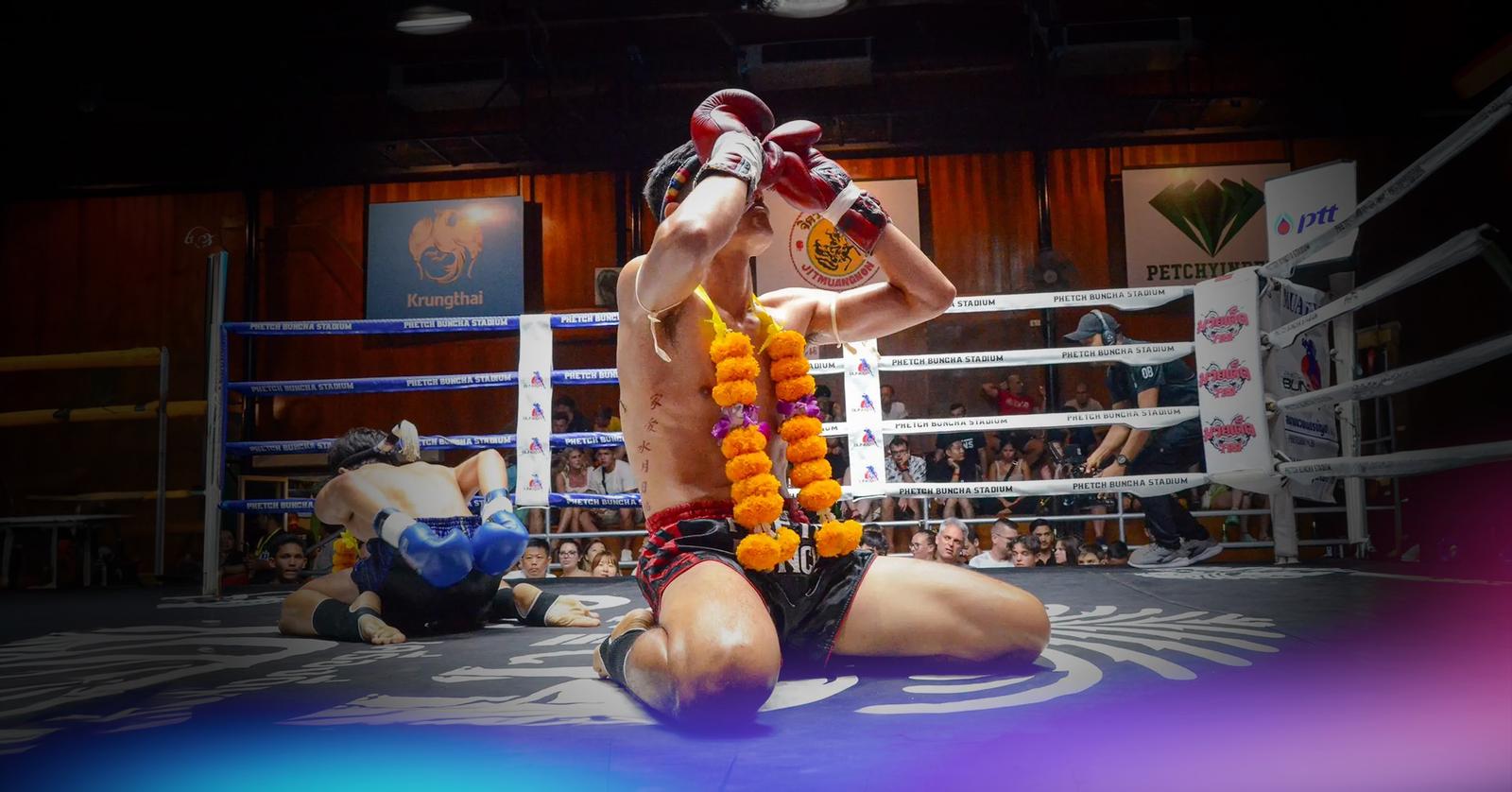
At the core of Muay Thai spiritual traditions lies the Wai Kru Ram Muay, one of the martial art's most distinctive and meaningful ceremonies. This ritualistic dance, performed before every fight, serves multiple profound purposes that transcend mere warm-up exercises.
Understanding the Components:
- Wai: The traditional Thai gesture of pressing palms together in prayer, signifying respect
- Kru (Khru): The Thai form of Sanskrit "guru," meaning teacher
- Ram: Classical Thai dance
- Muay: Boxing
Together, the term translates to "war-dance saluting the teacher," though Thai speakers commonly shorten it to either Wai Kru or Ram Muay.
The Ritual Process:
According to Wikipedia's documentation on Wai Khru Ram Muay, fighters begin by circling the ring counter-clockwise, bowing their heads at each corner three times—a salutation to Buddha, Dharma, and the Sangha of monks. The movements that follow are deeply personal, ranging from simple to highly complex choreography, often containing clues about the fighter's gym, trainer, and regional origin.
As described by Kombat Group Thailand, the ritual allows fighters "a moment of introspection, focus, and mental clarity before the onset of physical combat." This psychological preparation is considered as crucial as physical training, providing fighters with a mental edge and heightened sense of purpose.
Source: Wikipedia - Wai Khru Ram Muay; Classic Fight Team - The Role of Traditions and Rituals in Muay Thai
The Deeper Spiritual Significance
The Wai Kru represents far more than performance art. According to research from NOW Muay Thai, this sacred practice embodies three essential themes:
- Gratitude and Honor: Acknowledging that success is built on the wisdom of teachers and ancestors
- Spiritual Protection: Seeking blessings and safety before entering the dangerous arena
- Mental Preparation: Creating a psychological transition from the physical to the spiritual realm
Traditional belief holds that the Wai Kru connects fighters with divine protection, honoring their teachers while ensuring good fortune in the fight ahead. In Thai culture, the teacher-student relationship holds paramount importance, and this ceremony publicly demonstrates that respect.
Source: Austin Kickboxing - Muay Thai's Sacred Rituals
Krob Kru: The Rare Teacher Ceremony
The Krob Kru ceremony represents a rarer, more advanced ritual performed when a student has completely mastered Muay Thai and is deemed ready to become a Kru (teacher) themselves. This ceremony symbolizes the transfer of knowledge from master to student, marking the student's transition to teacher status.
While less common in modern times, NOW Muay Thai notes that the Krob Kru remains "an important part of Muay Thai's cultural heritage, symbolizing the continuity of tradition and the honor of teaching others." The ceremony ensures that the authentic techniques, philosophies, and spiritual elements of Muay Thai are preserved through generations.
Source: NOW Muay Thai - The Role of Muay Thai in Thai Culture
Sacred Symbols and Traditional Attire
The Mongkol: Sacred Headband of Protection
The Mongkol (sometimes spelled Mongkon) is a sacred headband worn by Muay Thai fighters during the Wai Kru and Ram Muay. According to YOKKAO, this headwear is "believed by Thai people to offer protection and good luck to its wearer."
Traditional Creation Process:
Mongkols are meticulously handcrafted by the fighter's trainer using rope and cloth, often adorned with talismans. Muay Thai Fever explains that "this task is taken upon by the trainers of the camp and the Mongkhons are blessed by monks in a ritual before they are eventually worn by a fighter." This blessing ceremony imbues the Mongkol with spiritual power.
The origins trace back to ancient Thai warriors who would write protective incantations on cloth strips and wear them around their heads during battle. These sacred texts were believed to offer divine protection, a tradition that evolved into today's Mongkol.
Sacred Handling:
The Mongkol is treated with utmost reverence. It must always be hung higher than head level and never placed on the ground, as this would dishonor its sacred nature. Fighters remove the Mongkol only after the Wai Kru ceremony is complete, and only their trainer may remove it.
Source: YOKKAO - What is Muay Thai; Muay Thai Fever - Traditional Muay Thai
Pra Jiad: The Sacred Armbands
The Pra Jiad (Prajiad) are cloth or rope bands tied around fighters' biceps. While worn during both pre-fight rituals and the actual match, these armbands carry deep personal significance. Kombat Group Thailand notes that traditionally, "some traditions used a piece of the boxer's mother's dress to signify her blessing for good health and safety."
In modern practice, Pra Jiad have also been adopted as a ranking system for practitioners not pursuing competitive fighting careers, with approximately 15 different colored grades representing progressive skill levels.
Source: Kombat Group Thailand - Traditions and Rules of Muay Thai
Phuang Malai: Floral Offerings
The Phuang Malai is a floral garland placed around fighters' necks before they enter the ring. According to Top King Boxing USA, this traditional adornment "holds spiritual significance" and must be handled with respect, hung somewhere above head height when not worn.
Source: Top King Boxing USA - Muay Thai Traditions, Rituals, and Superstitions
Sarama: The Mystical Music of Muay Thai
The Hypnotic Rhythm of Combat
One of Muay Thai's most distinctive cultural elements is Sarama (also spelled Sarama), the traditional rhythmic music accompanying fights. YOKKAO describes it as "hypnotic otherworldly sounds" that "starkly juxtaposes with swift brutal movements to characterize the sport of Muay Thai, that is like no other."
The Four Sacred Instruments:
According to Kombat Group Thailand, traditional Sarama music employs four instruments:
- Pi Java (Javanese Clarinet): The piercing wind instrument that carries the melody
- Klong Kaak: A set of drums providing rhythmic foundation
- Ching (Cymbals): Adding bright, metallic accents
- Kong Mong: A heavy drum for deep, resonant tones
The musicians respond dynamically to the fight's intensity, starting quiet and slow during the Wai Kru, then accelerating the tempo and increasing volume as the action intensifies. This creates an almost supernatural atmosphere unique to Muay Thai competitions.
Source: YOKKAO - What is Muay Thai; Kombat Group Thailand
Sak Yant: Sacred Tattoos of Power and Protection
The Ancient Art of Spiritual Armor
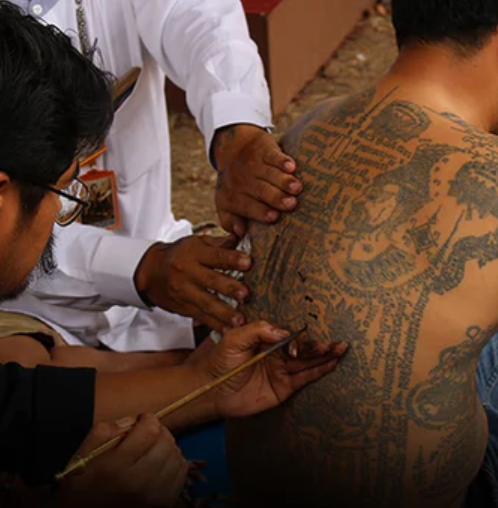
Sak Yant tattoos represent one of Muay Thai culture's most profound spiritual practices. These intricate designs, created using traditional hand-poked methods, are believed to provide protection, enhance strength, and channel spiritual energy to fighters.
According to NOW Muay Thai's research, "Sak yant tattoos serve as spiritual armor for Muay Thai practitioners, instilling confidence and connecting them to the rich cultural and spiritual heritage of Thailand." The tattoos aren't merely decorative—they're considered incomplete without the accompanying rituals and blessings that activate their spiritual power.
The Blessing Ceremony:
The process of receiving a Sak Yant is deeply spiritual. Fighters undergo rituals connecting them with the spiritual realm, typically performed by Buddhist monks or Ajarn (spiritual masters) who have preserved these ancient traditions. During the ceremony, sacred mantras are chanted to imbue the tattoo with protective power.
Common Designs and Their Meanings:
Popular Sak Yant designs include:
- Hah Taew (Five Lines): Represents blessings, protection, and good fortune
- Twin Tigers: Symbolizes courage and ferocity in battle
- Phra Phid Ta (Buddha Amulet): Represents mental peace and focus, "closing the eyes" to distractions
- Gao Yord (Nine Peaks): The most sacred of all Sak Yant, representing the nine peaks of Mount Meru
Source: NOW Muay Thai - The Spiritual Side of Muay Thai: Meditation and Sacred Rituals
The Cultural Values Embedded in Muay Thai
The Five Pillars of Muay Thai
The International Federation of Muaythai Associations formally recognizes five fundamental pillars that define Muay Thai culture:
- Respect (ความเคารพ)
- Reverence for teachers, opponents, and the art itself
- Demonstrated through the Wai greeting and ceremonial practices
- Core to the teacher-student relationship
- Honor (เกียรติยศ)
- Fighting with dignity and integrity
- Accepting victories and defeats with grace
- Upholding the reputation of one's gym and teacher
- Tradition (ประเพณี)
- Preserving ancient techniques like Mae Mai and Luk Mai Muay Thai
- Maintaining ceremonial practices across generations
- Connecting modern practitioners with historical warriors
- Excellence (ความเป็นเลิศ)
- Continuous pursuit of technical mastery
- Physical and mental discipline
- Dedication to improvement
- Fair Play (การเล่นที่ยุติธรรม)
- Ethical conduct in training and competition
- Transparent judging and administration
- Respect for opponents' safety
Buddhism's Influence on Muay Thai Culture
Thai Buddhism profoundly shapes Muay Thai's spiritual and ethical dimensions. According to Muay Thai Fever, "its traditional techniques, honed over millennia, intertwine with the country's rich spiritualism and the guiding principles of Buddhism."
Key Buddhist influences include:
- Mindfulness and Meditation: Many practitioners incorporate Buddhist meditation into training for mental clarity and focus
- Karma and Merit: The belief that honorable conduct brings positive karma
- Non-Attachment: Learning to let go of ego and pride
- Compassion: Respecting opponents and showing restraint in victory
NOW Muay Thai emphasizes that "Muay Thai is not only a form of physical combat but also a deeply spiritual practice, rooted in respect and gratitude." The pre-fight ceremonies involving prayers and blessings directly connect fighters with Buddhist traditions.
Source: Muay Thai Fever - Traditional Muay Thai; NOW Muay Thai - The Role of Muay Thai in Thai Culture
Traditional Muay Thai vs. Modern Sport
Muay Boran: The Ancient Form
Muay Boran (มวยโบราณ - Ancient Boxing) represents the original battlefield combat system from which modern Muay Thai evolved. The term was coined in the 20th century to distinguish historical martial techniques from the modernized sport.
Wikipedia explains that "the term Muay Boran was coined to describe the pre-modern historical martial art form of Muay Thai, and they came to symbolize a warrior spirit seen as a core component of Thainess." The ancient form included more dangerous techniques, such as:
- Headbutts
- Joint locks and breaks
- Groin strikes (now prohibited in most competitions)
- Weapon integration (staffs, swords, spears)
Regional Styles:
King Rama V formally recognized three regional Muay Boran styles, each with distinct characteristics:
- Muay Lopburi: Known for clever movements and strategic techniques
- Muay Korat: Emphasized powerful strikes and buffalo-like strength
- Muay Chaiya: Featured defensive techniques and counter-attacks
Source: Wikipedia - Muay Thai
The Modernization Process
The transition from Muay Boran to modern Muay Thai accelerated during the early 20th century. The Ultimate Guide to Muay Thai documents that "weight classes were introduced, and fighters were required to wear gloves and mouth guards. The traditional hemp rope hand wraps were also replaced with modern hand wraps."
Key Modernization Milestones:
- 1921: First boxing ring built at Suan Kulap
- 1930s: Boxing gloves mandated after a fighter's death in Khat Chueak (rope-bound) match
- 1941: Formal rules established, rounds timed by kick
- Post-WWII: International exposure as Thai soldiers trained abroad
- 1993: IFMA established, bringing international structure
- 2021: IOC recognition as Olympic sport
Despite modernization, Khaolak Muay Thai emphasizes that "Muay Thai remains deeply rooted in Thai culture, and it is still practiced in a traditional way in many parts of the country."
Source: Khaolak Muay Thai - The Ultimate Guide to Muay Thai; Wikipedia - Muay Thai
Preserving Ancient Techniques
Organizations like the Muay Thai Conservation Center work to preserve traditional techniques that modern rules have rendered obsolete. NOW Muay Thai reports that "many traditional techniques, such as Mae Mai Muay Thai and Luk Mai Muay Thai, have been adapted or forgotten due to modern rules and safety regulations."
Mae Mai and Luk Mai Muay Thai:
- Mae Mai (แม่ไม้ - "Mother Techniques"): The 15 foundational techniques forming Muay Thai's classical foundation
- Luk Mai (ลูกไม้ - "Child Techniques"): Advanced variations and combinations
While no longer required for competitive success, Muay Thai Fever notes these classics remain "important for advanced students and Instructors to understand... in order to appreciate the rich history of Muay Thai as an art form."
Source: NOW Muay Thai - The Role of Muay Thai in Thai Culture; Muay Thai Fever - Traditional Muay Thai